
Table of Contents
- How Far in Advance to Start Packing
- Decluttering Before a Move: What to Keep and What to Release
- Essential Packing Supplies List You Actually Need
- Creating a Packing System That Works
- Managing the Mental Load: Stress Reduction During Your Move
- Unpacking and Settling In After Your Move
- Conclusion
Last Updated: August 13, 2026
How Far in Advance to Start Packing
Start packing four to six weeks before your moving date. This timeline lets you sort belongings, acquire supplies, and pack methodically without rushing. For longer-distance moves or when coordinating with a moving company, begin eight weeks out for a comfortable buffer. Spread the work across multiple weeks rather than cramming everything into final days, dedicate just an hour or two each evening to one room or category. If your move is less than four weeks away, focus on one room per day, enlist help, and prioritize non-essential items first.
Decluttering Before a Move: What to Keep and What to Release
Before packing, declutter your home. Every item you don’t move is one less to pack, transport, and unpack. Most people move 20-30% of items they no longer need. Sort each room into categories: keep, donate, sell, and discard. Be honest about what you actually use, if you haven’t touched something in a year and it lacks sentimental value, remove it.
Sell items with value online or at consignment shops to reduce what you’re moving and offset costs. Donate usable items to charities that offer pickup services. Proper disposal ensures you’re not moving clutter to a new location where it will sit unused again.
Essential Packing Supplies List You Actually Need
Focus on supplies that genuinely protect belongings and make packing efficient:
Core Supplies:
- Moving boxes in multiple sizes (small for books, medium for general goods, large for light items)
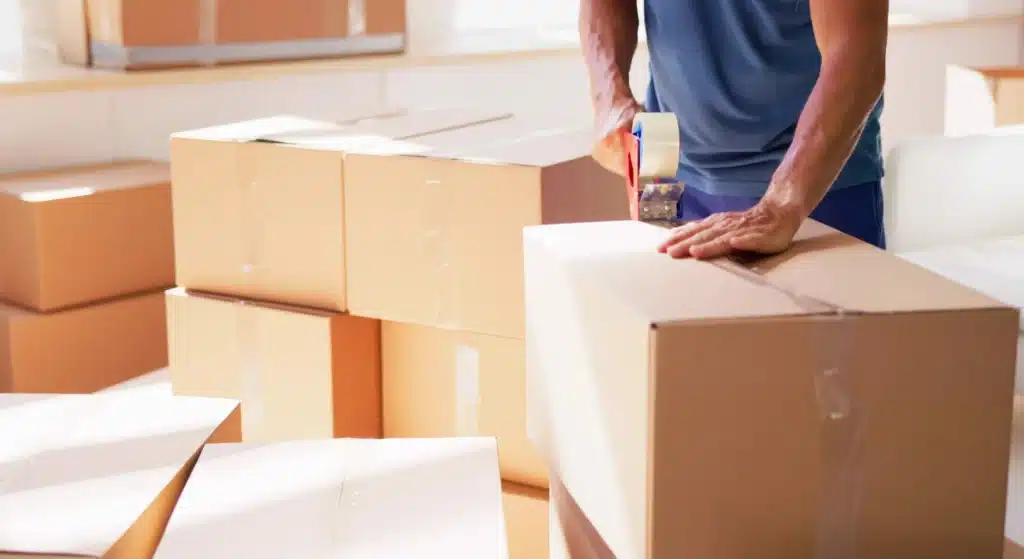
- Packing tape (at least two rolls per box)
- Bubble wrap for fragile items
- Packing paper or kraft paper for wrapping and filling gaps
- Markers in multiple colors for labeling and inventory
- Tissue paper or newspaper as a cheaper alternative to bubble wrap
- Plastic bins for accessible items or reuse after the move
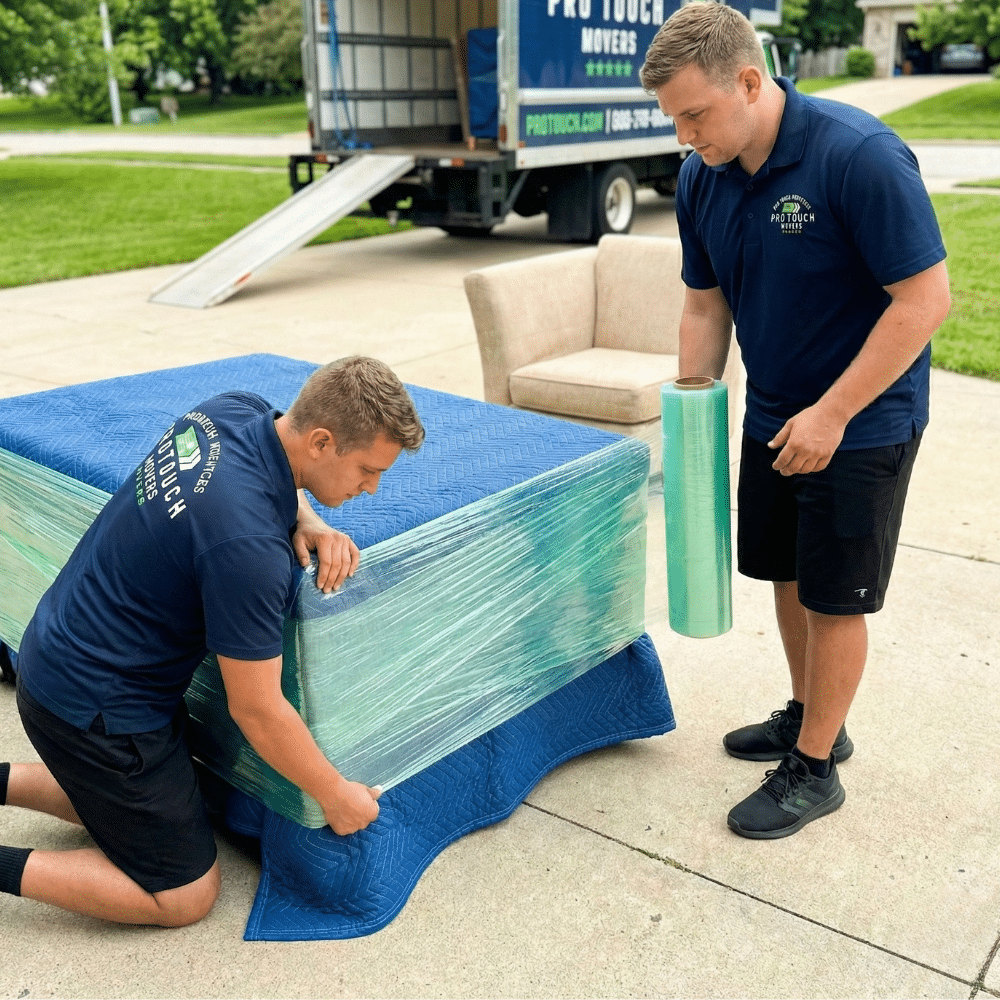
- Shrink or Stretch Wrap for bundling furniture and securing drawers
Where to Source Supplies and Budget Strategies:
Source free or discounted boxes from grocery stores, liquor stores, bookstores, or online marketplaces. Buy tape in bulk from warehouse clubs, a 12-pack costs significantly less per roll than individual rolls. Budget $15-$25 for adequate tape.
Use sustainable alternatives: crumpled newspaper, old towels, blankets, and clothing provide excellent cushioning at zero cost. Kraft paper from grocery bags works well for wrapping. Many people eliminate 40-60% of packing supply expenses by using items they already own.
Plastic bins cost $7-$15 for 20 gallons each and are optional if comfortable with cardboard boxes. Skip expensive specialty items like mattress covers or wardrobe boxes unless you have specific needs. Professional moving services often provide high-quality materials as part of their service, saving money and eliminating sourcing needs.
Sustainable Packing Alternatives:
Consider eco-friendly options: biodegradable packing peanuts, recycled kraft paper, and mushroom-based protective packaging. Reusable moving boxes made from recycled plastic can be rented through some moving companies, reducing both cost and waste. Using items you already own is the most sustainable and cost-effective approach.
Creating a Packing System That Works
A packing system prevents chaos and makes unpacking easier. Without one, you’ll end up with unmarked boxes and no idea where anything is.
Room-by-Room Approach
Pack one room at a time rather than jumping between spaces. This keeps items organized and makes it clear which boxes belong where. Start with rooms you use least, guest bedrooms, home offices, storage areas. Save your bedroom and kitchen for last since you’ll need items from these spaces until moving day.
Within each room, group similar items together. Pack all books together, all decorative items together, all clothing together. This creates natural categories that make unpacking logical. The room-by-room method also helps estimate how many boxes you’ll need and track progress visibly.
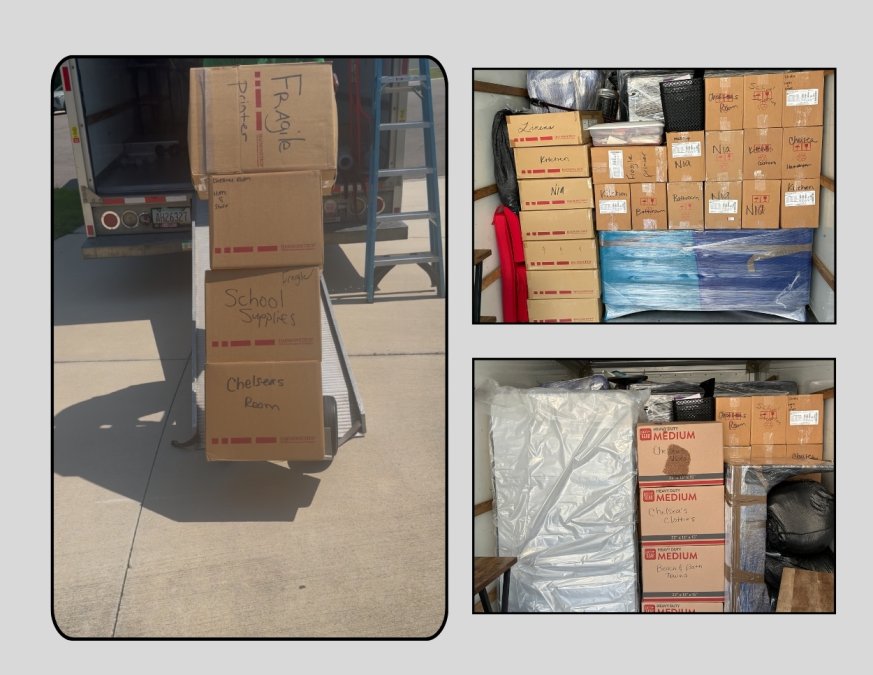
Labeling and Inventory
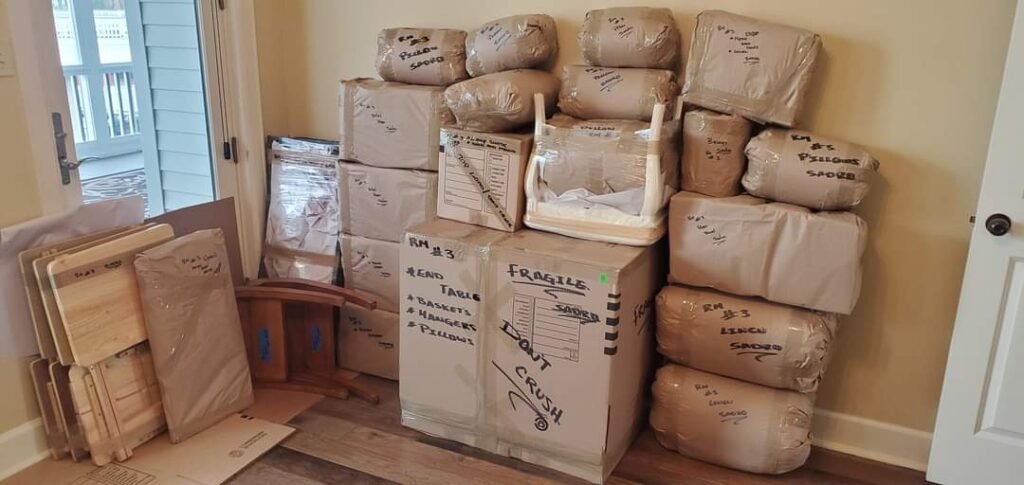
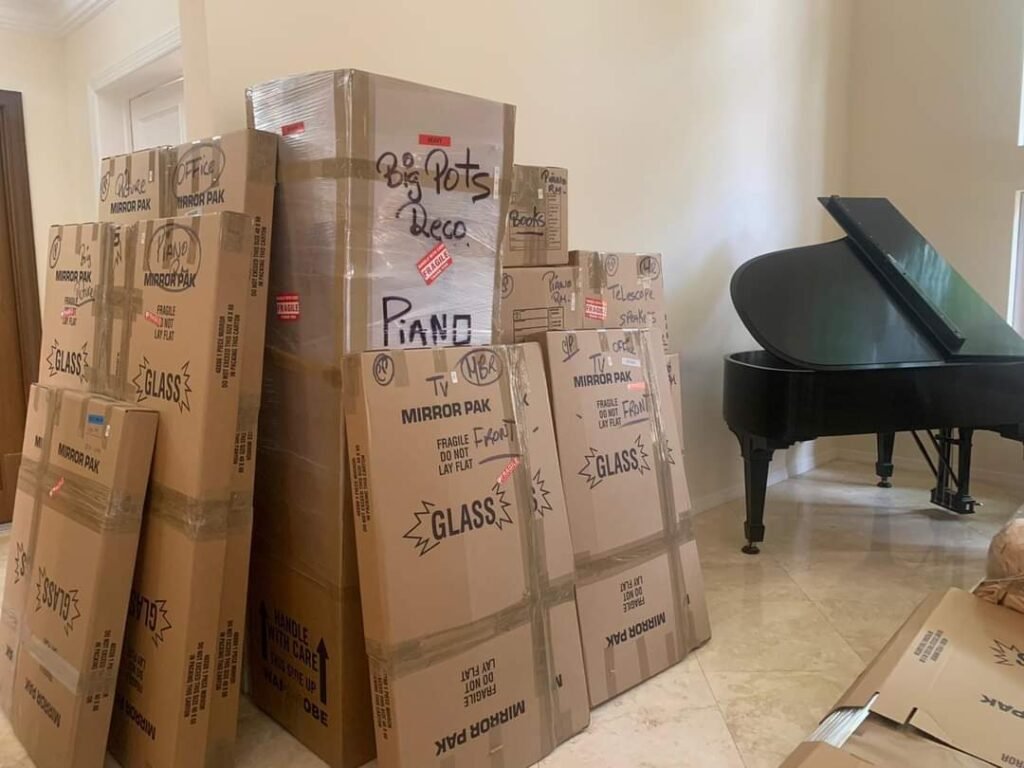
Label every box with three pieces of information: the room it’s going to and the contents if you prefer to know what’s exactly in that box. Use color-coding, blue for bedroom, green for kitchen, red for fragile items, so you can visually identify where boxes belong without reading every label.
Create a simple spreadsheet or notebook listing each box number, its contents, and destination room. This inventory helps locate specific items after the move without opening every box and provides documentation if anything goes missing. Professional moving companies often maintain their own inventory records, adding accountability.
Mark boxes containing dishes, glassware, or electronics with “FRAGILE” in large letters. Use extra padding, bubble wrap, packing paper, or towels, to protect breakables. Pack heavier items in smaller boxes and lighter items in larger boxes to keep boxes manageable.
Managing the Mental Load: Stress Reduction During Your Move
Moving ranks among life’s most stressful events. The physical demands of packing, emotional weight of leaving a familiar space, uncertainty about your new situation, and loss of control combine to create real psychological strain.
Understanding Moving-Related Stress:
Stress stems from decision fatigue (thousands of micro-decisions), loss of control (relying on movers and external timelines), grief about leaving (even positive moves carry emotional weight), and anticipatory anxiety about the unknown. Recognizing these sources helps address them specifically.
Get your free moving quote today →
Breaking Tasks Into Psychological Chunks:
Instead of “pack the entire house,” frame goals as “pack the guest bedroom closet tonight.” Your brain processes smaller goals as achievable, triggering dopamine release upon completion. Research shows people who break large projects into 4-6 week timelines with weekly milestones experience 30-40% less stress than those attempting compressed timeframes. Aim to complete one room per week with specific daily targets.
Setting Boundaries and Preventing Burnout:
Don’t pack for eight hours straight. Work 60-90 minutes, then take a real break. Your brain’s decision-making capacity depletes throughout the day; after 90 minutes of packing decisions, judgment deteriorates. Set specific packing hours and protect non-packing time as sacred. Knowing when packing will happen gives your brain permission to rest.
Managing Emotional Attachment to Your Current Home:
Before packing, acknowledge your feelings about leaving. Take photos of rooms you love, write down favorite memories, or sit in meaningful spaces. This ritual validates emotional significance rather than treating your home as just a logistics problem. When encountering emotionally weighted items, pause and feel the emotion rather than rushing past it.
Enlisting Support:
Don’t move alone logistically or emotionally. Friends, family, or professional movers share the load and transform a solitary task into a shared experience. Professional moving services handle heavy lifting and logistics, removing significant stress and letting you focus on organizational and emotional aspects. The presence of others provides emotional support and perspective.
Maintaining Physical Health During the Move:
Continue exercising, sleeping adequately, and eating well. These basics become more important when stressed yet are often abandoned first. A 20-minute walk, adequate sleep, and regular meals directly support mental resilience. Sleep deprivation amplifies stress perception by 30-50%, making everything feel harder.
Creating Rituals and Celebrating Progress:
Create small rituals marking progress. When finishing a room, take a photo of stacked boxes and send it to a friend. When hitting weekly goals, do something you enjoy, order takeout, watch a favorite show, take a long bath. On moving day, take a moment before leaving to acknowledge the transition through quiet reflection or a final walk through empty rooms.
Unpacking and Settling In After Your Move
Start with your essentials box and boxes labeled for bedroom and bathroom. Getting these spaces functional first creates a sense of home and a retreat when unpacking feels overwhelming.
Unpack one room at a time, not randomly throughout your new home. This focused approach prevents chaotic situations with half-empty boxes in every room for weeks.
As you unpack, resist keeping items just because you moved them. This is your chance for a second decluttering pass. Donate or discard items as you unpack rather than creating new storage problems.
Set a realistic unpacking timeline. Most people can unpack essentials within a week. Remaining boxes, seasonal items, decorative pieces, rarely-used equipment, can be unpacked over following weeks as you settle in.
Create a comfortable space quickly. Hang curtains, make your bed properly, and arrange furniture in bedroom and living areas within the first few days. These touches transform your new house into a home much faster than waiting until everything is perfectly unpacked.
How to pack for a stress-free move comes down to starting early, staying organized, and managing both practical and emotional dimensions of relocating. By decluttering before packing, using a clear packing system, and protecting your mental health throughout, you transform moving from an overwhelming ordeal into a manageable transition. When you’re ready to move, ProTouch Mover’s experienced crews can handle the heavy lifting and specialized transport, letting you focus on organizational and emotional aspects of your relocation. Get your free moving quote today and discover how professional moving services can reduce your stress and ensure your belongings arrive safely at your new home.
Frequently Asked Questions
How far in advance should you start packing for a move?
Start packing 4-6 weeks before your move date for a typical household. Begin with items you use infrequently, like seasonal decorations and specialty kitchen equipment. Two weeks out, focus on everyday items. This timeline prevents last-minute stress and gives you time to declutter thoughtfully. For long-distance moves, consider starting earlier to spread the work across more days and reduce overwhelm.
What essential packing supplies do you need for a stress-free move?
Invest in sturdy moving boxes of various sizes, packing tape, bubble wrap, and packing paper. Include markers for labeling, a moving checklist, and storage bins for organizing small items. Don't skip quality supplies—cheap boxes collapse under weight and inadequate padding risks damage to fragile items. Budget for these basics; they're worth the cost to protect your belongings and simplify your move.
What should you include in your moving day survival kit?
Pack an essentials box with toiletries, medications, phone chargers, a change of clothes, important documents, snacks, and basic tools. Include bedding, towels, and a few kitchen items for your first night. Keep this box with you rather than on the moving truck so you have immediate access. This overnight bag approach reduces stress when you arrive at your new home exhausted.
How do you pack a house quickly and efficiently?
Use a room-by-room packing system and label every box with its destination room and contents. Start with rooms you use least frequently, like guest bedrooms and storage areas. Pack similar items together and keep an inventory list as you go. This organizational approach prevents you from searching through random boxes later and makes unpacking straightforward and manageable.
This article was written using GrandRanker