
Table of Contents
- Key Factors Affecting Moving Company Quotes
- Binding vs. Non-Binding Moving Estimates: Understanding the Difference
- Hidden Fees Moving Companies Don’t Always Disclose
- Tips for Getting Accurate Moving Quotes
- Using a Moving Cost Calculator and Negotiation Tactics
- How Professional Movers Calculate Your Moving Estimate
- Conclusion
Last Updated: July 27, 2026
Understanding factors affecting moving company quotes is essential for anyone planning a relocation. The complexity of moving costs extends far beyond simple distance calculations. At ProTouch Mover, we’ve analyzed thousands of moving estimates to identify exactly which variables drive your final bill. Below, we’ll show you the key factors that influence moving company quotes and reveal the hidden costs most guides overlook.
Key Factors Affecting Moving Company Quotes
Several primary variables form the foundation of any moving estimate. These factors determine the baseline cost before any add-ons or surcharges apply.
Distance of the Move
The distance traveled is one of the most straightforward cost drivers, yet it’s calculated differently depending on move type. Local moves within a metropolitan area typically charge hourly rates based on labor and truck time. Long-distance moves, generally defined as anything over 100 miles, shift to weight-based or mileage-based pricing models.
For local moving, many companies charge three to four hours minimum, with hourly rates varying by market and crew size. For long-distance relocations, moving companies calculate the cost per pound or use a flat rate based on distance and estimated weight. Fuel costs and route efficiency also affect distance pricing, a move to a remote rural area may cost more than a similar-distance move to an urban center due to return trip logistics. ProTouch Mover factors in actual route planning rather than straight-line distance, ensuring quotes reflect real-world logistics.
Weight and Volume of Belongings
The total weight of your belongings is critical for long-distance moving estimates. Professional movers typically charge per pound for interstate moves, meaning a heavier load directly increases your cost. Volume matters equally for local moves, where companies may quote based on cubic feet of truck space needed.
Understanding the distinction between weight-based and volume-based pricing helps you anticipate costs. A bedroom full of heavy wood furniture takes up less space than the same room of lightweight plastic and fabric items, yet the wood furniture costs more under weight-based pricing. Creating an accurate inventory list before requesting quotes improves estimate accuracy significantly. Detailed inventory, counting boxes, listing furniture dimensions, and noting special items, gives moving companies the data they need to provide binding estimates.
Time of Year and Seasonal Demand
Peak moving season runs from May through September, when demand for professional movers surges and prices rise accordingly. Summer moves cost 20-30% more than off-peak moves during the same distance. Winter months, particularly November through February, offer lower rates because fewer people relocate during colder weather.
The specific day of the week also affects pricing. Mid-week moves (Tuesday through Thursday) are cheaper than weekend moves, which are in high demand. Month-end moves are more expensive because many lease agreements end on the last day of the month. Planning your move for an off-peak date can yield significant savings compared to peak season.
Access Issues and Special Requirements
Access challenges add substantial costs to moving estimates. Stairs, narrow hallways, tight corners, and lack of elevator access require extra labor and time. A third-floor walk-up apartment costs more to move into than a ground-floor unit with direct truck access, even if the distance and weight are identical.
Long carries, distances from the truck to your door, increase labor costs. Restricted access buildings add complexity through move permits, limited moving hours, or building fees that pass through to you. Older buildings with narrow stairwells slow down the move, increasing labor hours and cost.
Binding vs. Non-Binding Moving Estimates: Understanding the Difference
The type of estimate you receive determines whether your quote is legally binding. This distinction matters enormously for your budget certainty.
A binding estimate locks in your price regardless of actual weight or circumstances. The moving company cannot charge more on moving day, even if your belongings weigh more than estimated. Non-binding estimates provide a quote based on estimated weight, but the final bill adjusts based on actual weight measured at the truck.
What Binding Estimates Protect You
Binding estimates eliminate the uncertainty that creates moving day stress. The company has inspected your home, counted your items, and provided a firm price. You know exactly what you’ll pay before the truck arrives. This protection is especially valuable for people with fixed budgets or those relocating for employment with limited flexibility.
However, binding estimates typically include only standard moving services. Add-ons like extra packing supplies, shuttle services, or specialty item handling still incur additional charges. ProTouch Mover provides transparent binding estimates that account for access challenges, seasonal demand, and special requirements identified during the in-home assessment.
When Non-Binding Estimates Make Sense
Non-binding estimates work when your inventory is uncertain or still in flux. If you’re downsizing and haven’t decided what to keep, a non-binding estimate gives you flexibility without committing to a firm price. Non-binding estimates also suit situations where weight is difficult to predict, such as collectors with extensive items or businesses relocating equipment.
Hidden Fees Moving Companies Don’t Always Disclose
Beyond the base moving cost, numerous add-on charges accumulate during a move. Understanding these hidden fees prevents budget shock on moving day.
Common Surcharges and Add-On Costs
Stair fees apply when movers must carry items up or down flights of stairs rather than using ground-level access. Elevator fees or building access charges occur when the building requires permits, deposits, or fees to reserve elevator time. Packing services cost extra if you request professional packers rather than packing yourself. Full-service packing costs significantly more than partial packing or no packing.
Storage fees apply if you need temporary storage between move-out and move-in dates. Daily or monthly storage rates vary by facility and climate control options. Climate-controlled storage costs more than standard storage but protects sensitive items.

Fuel Surcharges and Fluctuating Gas Prices
Fuel surcharges represent a variable cost that changes based on petroleum prices. When gas prices rise, moving companies often add surcharges to offset increased operational costs. These charges typically appear as a percentage of the base quote or a fixed per-gallon surcharge.
Understanding fuel surcharge policies before committing to a moving company prevents surprises. Some companies lock in fuel costs at the time of estimate; others apply current fuel prices on moving day. A binding estimate should specify fuel surcharge terms clearly. For long-distance moves, fuel surcharges can add hundreds of dollars to your bill.
Tips for Getting Accurate Moving Quotes
Accurate quotes require detailed information and honest communication with moving companies. The more precise your inventory and requirements, the more reliable your estimate.
Digital Inventory Tools vs. In-Home Estimates
Digital inventory tools allow you to input your belongings remotely, generating estimates without a physical visit. These tools work best when you have a clear sense of your inventory and can accurately describe dimensions and quantities. In-home estimates involve a representative visiting your home to physically assess your belongings, measure spaces, and identify access challenges. This method provides far more accurate estimates because the estimator sees actual items, stairs, doorways, and parking situations.
For local moves with straightforward access, digital tools may suffice. For long-distance moves, complex layouts, or high-value belongings, in-home estimates justify the time investment. ProTouch Mover offers both options, with in-home estimates recommended for maximum accuracy.
Preparing Your Inventory List for Accuracy
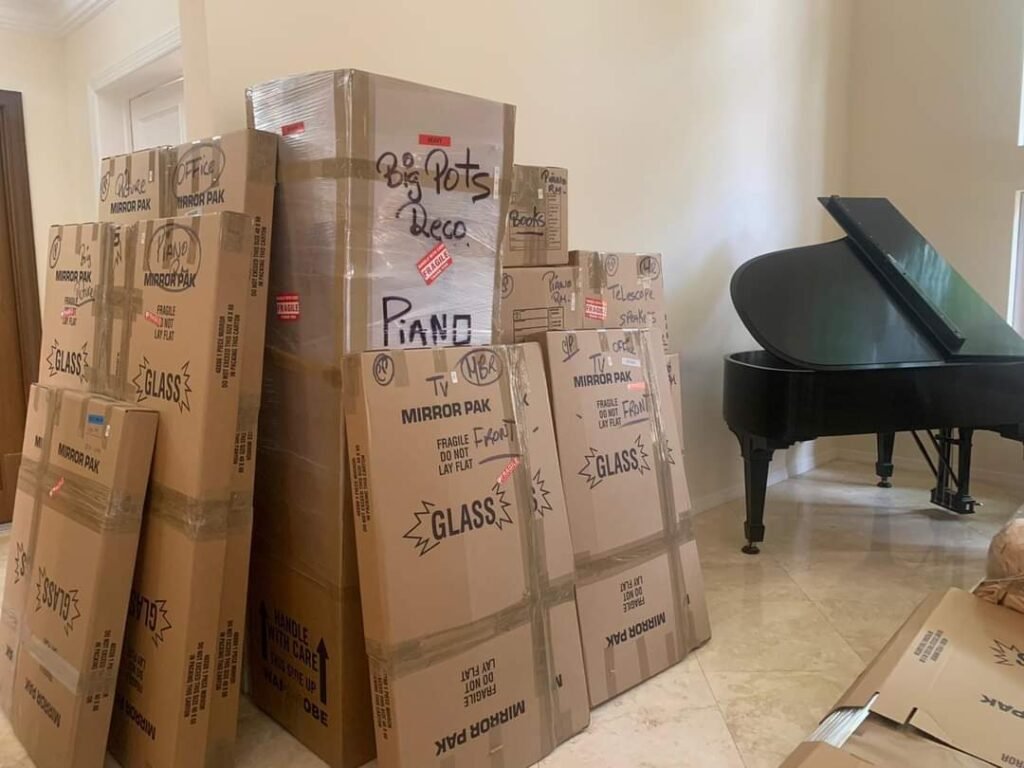
Creating a detailed inventory before requesting quotes dramatically improves estimate reliability. Walk through your home room by room, listing major furniture pieces with approximate dimensions, counting boxes, and noting special items requiring extra care. Measure doorways, hallways, and stairwells if you’re uncertain about access. Note any items requiring special handling, pianos, safes, antiques, or artwork, and mention these details explicitly when requesting quotes.
Be honest about your belongings’ condition. Worn or damaged items may require extra padding or special handling, increasing costs. Disclose any items that are particularly heavy, fragile, or bulky upfront rather than surprising movers on moving day.
Using a Moving Cost Calculator and Negotiation Tactics
Moving cost calculators provide ballpark figures based on distance, weight, and move type. These tools help you understand pricing ranges and compare quotes from multiple companies.
How to Use Cost Calculators Effectively
Moving cost calculators ask for basic information, origin zip code, destination zip code, estimated weight or cubic feet, and move date, then generate estimated cost ranges. Use calculators to establish baseline expectations before requesting formal quotes. If a calculator shows a typical move at your distance and weight costs $3,000-$5,000, quotes significantly above or below this range warrant investigation.
However, calculators cannot account for access issues, seasonal demand variations, or special requirements unique to your move. Formal estimates from actual moving companies remain essential for accurate pricing.
Negotiation Strategies for Better Moving Quotes
Obtaining multiple quotes gives you leverage in negotiations. If one company’s quote is significantly higher, ask them to explain the difference or request a revised quote. Flexibility with your moving date offers negotiation power, offering to move on a Tuesday in February rather than a Saturday in July demonstrates willingness to work around the company’s schedule.
Bundling services sometimes reduces overall costs. Asking about package deals, combining packing, loading, and storage, for example, may yield better pricing than booking services separately. ProTouch Mover offers comprehensive packages designed to reduce total moving costs compared to à la carte service pricing.
How Professional Movers Calculate Your Moving Estimate
Professional movers use systematic approaches to estimate costs accurately. Understanding their methodology helps you provide better information and receive more reliable quotes.
Labor Hours and Number of Movers Required
Moving companies estimate labor hours based on inventory size, access complexity, and distance. A two-bedroom apartment with straightforward access might require 4-6 hours with a two-person crew. A three-story home with narrow stairs and restricted parking could require 8-10 hours with a three-person crew.
The number of movers assigned affects both labor costs and move speed. More movers complete the job faster but cost more per hour. Professional movers factor in setup time, equipment positioning, and breakdown time. Accurate labor estimates require understanding these variables.
Specialty Items and Moving Add-Ons
Specialty items require additional planning and cost. Pianos, safes, antiques, artwork, and high-value electronics need specialized handling, packing materials, and sometimes extra labor. Fragile items increase packing material costs and labor time. Climate-controlled moving trucks cost more than standard trucks but protect sensitive items from temperature and humidity fluctuations.
| Factor | Impact on Quote | Typical Range |
|---|---|---|
| Distance (local) | Hourly labor | $100-$200/hour |
| Distance (long-distance) | Per-pound pricing | $0.50-$1.50/lb |
| Weight | Direct multiplier | +$500-$3,000 per 5,000 lbs |
| Season (peak vs. off-peak) | Base price multiplier | +20-30% peak season |
| Access challenges | Labor time addition | +$200-$1,000 |
| Specialty items | Per-item surcharge | +$300-$2,000 |
| Storage needs | Daily/monthly rate | $50-$300/month |
| Fuel surcharge | Percentage addition | +5-15% of base |
Moving company quotes reflect the genuine complexity of relocating your life. Distance, weight, access challenges, and seasonal demand create the foundation of pricing. Hidden fees, stairs, fuel surcharges, specialty items, and storage add up quickly without proper planning.
ProTouch Mover provides transparent, detailed estimates that account for every factor affecting your moving company quotes. Our team conducts thorough in-home assessments, identifies potential access issues, and explains every charge before moving day. With binding estimates that lock in pricing and expert crews that handle your belongings with care, you’ll know exactly what to expect. Get your free moving quote today and experience the ProTouch Mover difference, punctual service, protected belongings, and complete peace of mind during your relocation.
Frequently Asked Questions
What information do I need to provide to get an accurate moving company quote?
To receive an accurate moving estimate, provide your complete inventory list (including number of bedrooms, furniture, and specialty items), the distance of your move (local or long-distance), moving date, and any access challenges like stairs, elevators, or long carries. Digital inventory tools can help capture this detail, but in-home estimates allow movers to assess cubic feet and weight more precisely. The more detailed your information, the less likely you'll face hidden costs on moving day.
How do binding vs. non-binding moving estimates protect me differently?
A binding estimate guarantees the final cost won't exceed the quoted price (unless you add services), protecting you from surprise charges. A non-binding estimate is an approximation, your final bill may be higher based on actual weight or labor hours. Binding estimates typically require an in-home assessment and are ideal for long-distance moves where weight is uncertain. Non-binding estimates suit local moves with clear inventory. Always clarify which type you're receiving and what conditions might trigger price adjustments.
What are the most common hidden fees in moving company quotes?
Common hidden fees include stair fees, long-carry charges for distances over 50 feet, shuttle service fees, fuel surcharges (especially during peak season or when gas prices spike), valuation coverage upgrades, and charges for specialty items like pianos or safes. Some companies add fees for packing supplies, unpacking services, or storage. Always ask moving companies to itemize their cost breakdown and clarify which services are included in the base quote versus add-ons to avoid surprises.
How can I negotiate a better moving quote?
Gather multiple moving estimates to compare pricing and use competitive quotes as leverage, many companies will match or beat offers from competitors. Book during off-peak seasons (fall/winter) for lower rates than peak season (summer). Be flexible with your moving date if possible, as mid-week moves often cost less than weekends. Request a binding estimate to lock in pricing. Ask about discounts for seniors, military, or corporate relocations. Finally, ensure your inventory list is accurate to avoid upcharges due to underestimated weight or cubic feet.
This article was written using GrandRanker