
Table of Contents
- 15 Essential Questions to Ask Moving Companies
- 1. Are You Licensed and Accredited by FMCSA and USDOT?
- 2. What Insurance and Liability Coverage Do You Provide?
- 3. Will You Provide a Binding or Non-Binding Estimate?
- 4. What Are Your Additional Fees and Hidden Costs?
- 5. Do You Conduct Background Checks and Drug Testing?
- 6. Will You Perform an In-Home Survey for Inventory?
- 7. Do You Offer Packing and Custom Crating Services?
- 8. What Is Your Damage and Claims Process?
- 9. Are You a Moving Broker or Direct Carrier?
- 10. What Is Your Delivery Window and Flexibility?
- 11. Do You Offer Storage-in-Transit Services?
- 12. What Technology and Digital Tools Do You Use?
- 13. What Is Your Last-Minute Cancellation Policy?
- 14. Do You Offer Eco-Friendly Moving Options?
- 15. Can You Provide References and Verify Your Track Record?
- Red Flags Moving Companies That Signal Potential Scams
- Understanding Binding vs Non-Binding Estimates Explained
- Moving Insurance Options: Full Value vs Released Value Protection
- How to Verify a Moving Company’s Legitimacy
- Digital Contract Analysis: What to Review Before Signing
- Conclusion: Ask the Right Questions to Find Your Ideal Moving Partner
Last Updated: July 17, 2026
15 Essential Questions to Ask Moving Companies
Hiring a moving company is one of the largest decisions you’ll make during a relocation. Asking the right questions upfront prevents costly mistakes, unexpected fees, and damaged belongings. This guide walks you through the 15 most important questions to ask before signing a contract, covering everything from licensing and insurance to hidden fees and damage claims policies.
1. Are You Licensed and Accredited by FMCSA and USDOT?
Every legitimate moving company operating interstate moves must have a USDOT number and FMCSA accreditation. Ask for their USDOT number and verify it directly on the Federal Motor Carrier Safety Administration database. You can check their status, complaints, and safety record in minutes. For intrastate moves, requirements vary by state, but most require licensing with their Department of Transportation. Never assume legitimacy based on a website alone.
Many moving scams use variations of legitimate company names or claim credentials they don’t have. Always verify the exact USDOT number the company provides.
2. What Insurance and Liability Coverage Do You Provide?
Moving companies must offer valuation coverage, but what they offer and what you need are often different. Most movers provide released value protection as a baseline, covering only pennies per pound. For a 10,000-pound move, released value might cover only $100 total in damages. Full value protection means the mover is responsible for actual replacement cost of damaged or lost items. Get valuation coverage options in writing and ask whether they carry workers’ compensation insurance.
3. Will You Provide a Binding or Non-Binding Estimate?
A binding estimate commits the company to the quoted price regardless of actual weight or time. A non-binding estimate is their best guess, but your final bill could be significantly higher. Always request a binding estimate if possible. If they refuse, ask for a written guarantee of the maximum amount you could be charged.
Many moving scams start with a low non-binding estimate, then demand significantly more money on [moving day](/blog/apartment-moving-what-to-do-before-during-and-after-moving-day/) when your belongings are already loaded on the truck.
4. What Are Your Additional Fees and Hidden Costs?
Moving companies often quote a base price but charge accessorial fees for stairs, elevators, long carries, shuttle services, storage-in-transit, and fuel surcharges. Request a detailed, itemized estimate that lists every possible charge. Don’t accept vague language like "fees may apply."
5. Do You Conduct Background Checks and Drug Testing?
The people handling your belongings will have access to your home and valuables. Ask whether the company conducts background checks on all crew members before they enter your home and whether they conduct drug testing. If they don’t, that’s a significant red flag.
6. Will You Perform an In-Home Survey for Inventory?
An in-home survey creates an accurate inventory list and helps the company provide a precise estimate. It also identifies potential challenges like narrow doorways or fragile items requiring special equipment. Ask whether the survey is free and done in person or virtually. In-person surveys are more accurate.
7. Do You Offer Packing and Custom Crating Services?
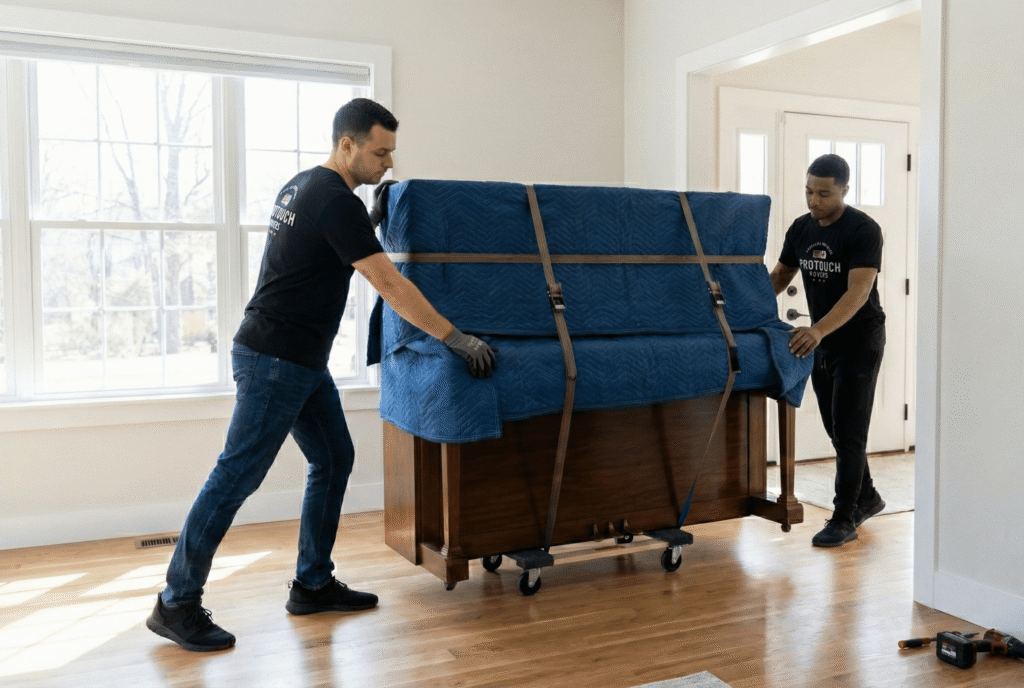
Ask what packing services they offer and whether they provide custom crating for high-value or fragile items like pianos, art, or antiques. Ask what materials they use, quality boxes, padding, and tape matter significantly for protection.
8. What Is Your Damage and Claims Process?
Ask for their written claims policy. How long do you have to file a claim after delivery? What documentation do they require? How long does the claims process take? A reputable company will have a straightforward, documented process.
The best time to understand the claims process is before you need it. Get their policy in writing and read it carefully before signing a contract.
9. Are You a Moving Broker or Direct Carrier?
A moving broker subcontracts the actual moving work to another company. A direct carrier owns the trucks and employs the crew that moves you. When possible, hire a direct carrier for clear accountability. Ask directly: "Will your company’s crew and trucks move my belongings, or will you subcontract this work?"
10. What Is Your Delivery Window and Flexibility?
Ask what delivery window they guarantee, specific time windows or broader three-day periods. Ask about flexibility if your schedule changes and what fees apply for rescheduling.
11. Do You Offer Storage-in-Transit Services?
Storage-in-transit allows temporary storage of your belongings between pickup and delivery. Ask whether they offer this service, how long items can be stored, what it costs, and whether the storage facility is climate-controlled. Climate control protects belongings from extreme temperatures and humidity.
12. What Technology and Digital Tools Do You Use?
Ask what tracking capabilities they provide and whether you can monitor your move in real time. Ask about their contract process, digital contracts are faster and provide clear records. Companies investing in technology typically have more professional operations overall.
Digital tracking and communication reduce misunderstandings and make the moving process less stressful.
13. What Is Your Last-Minute Cancellation Policy?
Ask what their cancellation policy is, how much notice you need to avoid penalties, and what fees apply if you cancel within a certain timeframe. Understand this before signing so you’re not trapped if circumstances change.
14. Do You Offer Eco-Friendly Moving Options?
Ask whether the company uses fuel-efficient vehicles, recycles packing materials, or offers reusable moving containers. If sustainability matters to you, this signals whether the company thinks about long-term impact.
15. Can You Provide References and Verify Your Track Record?
Ask for at least three references from moves completed in the last six months. Contact these customers and ask about their experience. Also check online reviews on Google, Yelp, and the Better Business Bureau. Look for patterns in feedback.
Red Flags Moving Companies That Signal Potential Scams
Watch for companies that won’t provide a USDOT number, demand large upfront cash payments, give only verbal estimates without written documentation, or pressure you to decide immediately. Be wary of companies with no physical office address or those that won’t let you inspect belongings before signing off on delivery.

Understanding Binding vs Non-Binding Estimates Explained
A binding estimate commits the moving company to a specific price after an in-home survey. A non-binding estimate is an educated guess; the actual bill could be higher. Some non-binding estimates include a "not to exceed" clause setting a maximum price. For most moves, request a binding estimate after an in-home survey for cost certainty.
| Estimate Type | Price Guarantee | When Used | Best For |
|---|---|---|---|
| Binding | Locked in after survey | Most household moves | Certainty and budget planning |
| Non-binding | Estimate only, can change | Quick preliminary quotes | Getting a rough idea of cost |
| Binding Not-to-Exceed | Price cap with potential for lower final bill | Long-distance moves | Protection with flexibility |
Moving Insurance Options: Full Value vs Released Value Protection
Released value protection is the baseline, typically covering 60 cents per pound. On a 10,000-pound move, this covers only about $6,000 in damages. Full value protection means the company is responsible for actual replacement cost of damaged or lost items. This costs more but provides real protection, typically 1-3% of declared value as a premium. Third-party moving insurance is another option for high-value items.
How to Verify a Moving Company’s Legitimacy
Visit the FMCSA website and search for the company’s USDOT number to see their safety record and insurance status. Check the Better Business Bureau for their rating and complaints. Search Google and Yelp for reviews, reading both positive and negative carefully. Verify their physical address, legitimate moving companies have offices you can visit.
Digital Contract Analysis: What to Review Before Signing
Review the binding estimate amount and verify it matches your quote. Check the valuation coverage type and limits. Confirm pickup and delivery dates and any guaranteed delivery windows. Review the cancellation policy and whether the contract specifies which crew will handle your move. Look for clauses about additional charges and verify the company’s liability limits and claims process. Don’t sign a contract you don’t fully understand.
Frequently Asked Questions
What are the most important questions to ask a moving company?
The most critical questions to ask moving companies focus on legitimacy, protection, and cost transparency. Always verify their USDOT number and FMCSA licensing, confirm what insurance and valuation coverage they provide (full value protection vs released value protection), request a binding estimate in writing, ask about background checks and drug testing for employees, and understand their damage claims process. These questions directly protect your belongings and budget.
What is the difference between a binding and non-binding estimate?
A binding estimate locks in the price before moving day, the company cannot charge more unless you request additional services. A non-binding estimate is an educated guess based on an in-home survey; the final bill may be higher if your household goods weigh more than estimated. For interstate moves, always request a binding estimate in writing. For intrastate moves, binding estimates are typically more common. Request itemized details for either type.
What red flags should I watch for when hiring movers?
Red flags include: no USDOT number or inability to verify it, refusal to provide a written estimate, requesting large upfront deposits (legitimate movers collect payment after delivery), vague pricing with unspecified accessorial charges, no workers' compensation insurance, unwillingness to conduct an in-home survey for accurate quotes, and poor online reviews or complaints about hostage loads. Use the Movers To Trust Scam Risk Analyzer to check federal databases for lapsed insurance or complaints before booking.
How do I verify a moving company is legitimate and accredited?
Verify legitimacy by requesting their USDOT number and confirming it on the FMCSA database. Check their USDOT number on Movers To Trust's Scam Risk Analyzer, which flags lapsed insurance and hostage goods complaints. Review verified customer feedback on MovingCompanyReviews.com. Ask for proof of workers' compensation insurance and general liability coverage. Confirm they're accredited by industry bodies like the American Moving & Storage Association. Legitimate carriers provide transparent bill of lading documents and detailed inventory lists.
What moving insurance options should I choose for my household goods?
Most moving companies offer two standard options: released value protection (basic, often free but provides minimal compensation) and full value protection (higher cost but covers repair, replacement, or cash value of damaged items). For high-value items, consider third-party moving insurance through providers like MovingInsurance.com, which typically costs 1-4% of your declared item value. Request full details on valuation coverage limits, deductibles, and the claims process before your moving day.
This article was written using GrandRanker